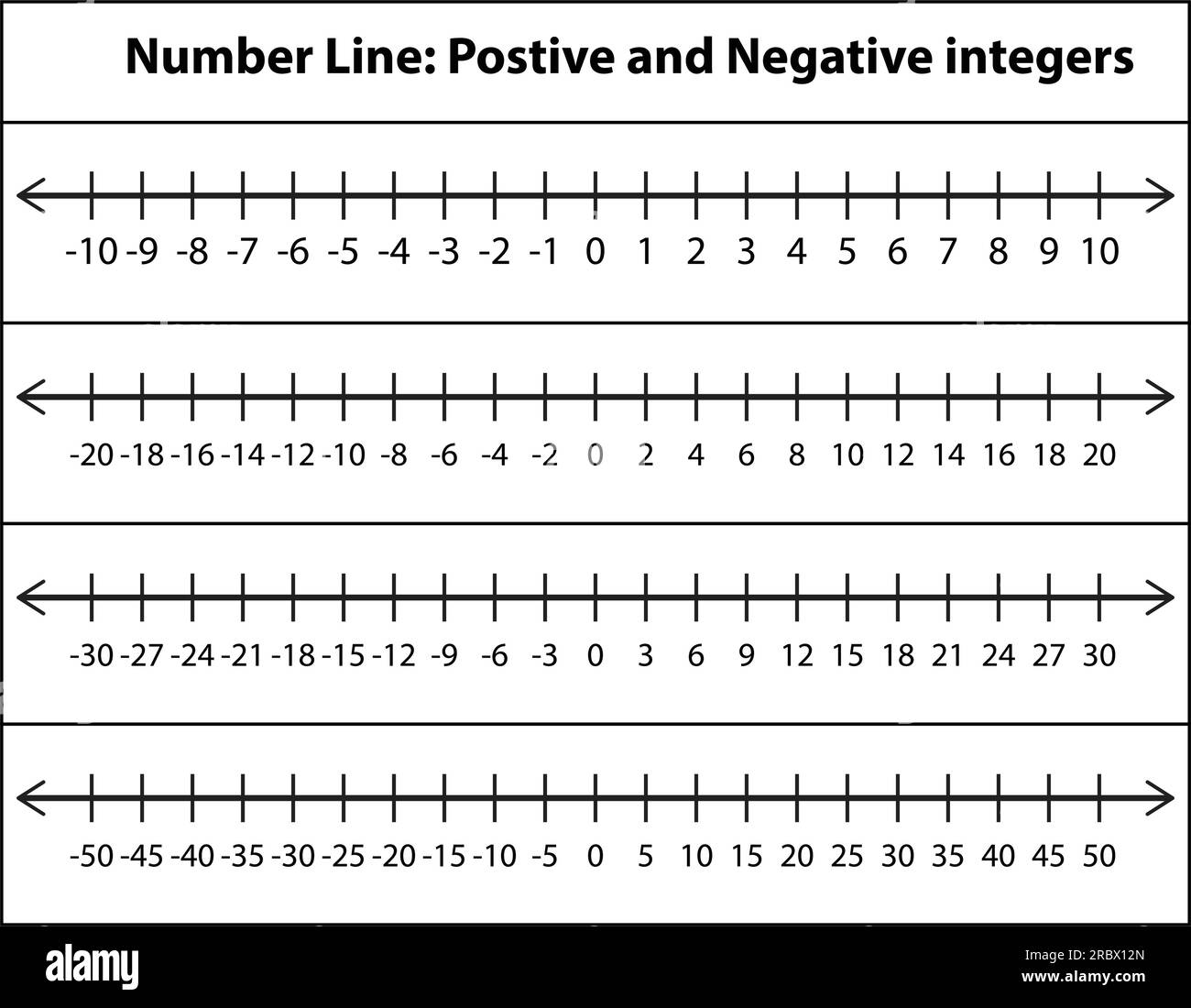
Understanding the concept of negative minus a negative is fundamental in mathematics, particularly in arithmetic operations. This concept is not just about performing calculations but also about grasping the underlying principles that govern how numbers interact. Whether you are a student, a teacher, or someone who enjoys solving mathematical puzzles, understanding this concept can significantly enhance your problem-solving skills.
What is a Negative Number?
A negative number is any number less than zero. These numbers are represented with a minus sign (-) before the digit. For example, -3, -5, and -10 are all negative numbers. Negative numbers are essential in various fields, including finance, physics, and engineering, where they represent concepts like debt, below-zero temperatures, and negative charges.
Understanding Negative Minus a Negative
When you encounter the phrase negative minus a negative, it refers to the operation of subtracting one negative number from another. This operation can be a bit confusing at first, but with a clear understanding of the rules, it becomes straightforward. The key rule to remember is that subtracting a negative number is equivalent to adding a positive number.
Rules for Negative Minus a Negative
To perform the operation of negative minus a negative, follow these steps:
- Identify the two negative numbers involved in the operation.
- Convert the subtraction of the second negative number into the addition of its positive counterpart.
- Perform the addition operation.
Let's break this down with an example:
Consider the expression -5 - (-3).
- Identify the two negative numbers: -5 and -3.
- Convert the subtraction of -3 into the addition of 3: -5 + 3.
- Perform the addition: -5 + 3 = -2.
So, -5 - (-3) equals -2.
💡 Note: Remember, subtracting a negative number is the same as adding a positive number. This rule simplifies many arithmetic operations involving negative numbers.
Examples of Negative Minus a Negative
Let’s look at a few more examples to solidify the concept:
| Expression | Step-by-Step Solution | Result |
|---|---|---|
| -8 - (-4) | -8 + 4 | -4 |
| -12 - (-7) | -12 + 7 | -5 |
| -15 - (-15) | -15 + 15 | 0 |
In each of these examples, the operation involves converting the subtraction of a negative number into the addition of a positive number, making the calculation straightforward.
Applications of Negative Minus a Negative
The concept of negative minus a negative has numerous applications in real-life scenarios. Here are a few examples:
- Finance: In accounting, negative numbers often represent debts or losses. Understanding how to subtract negative numbers can help in calculating net gains or losses.
- Physics: In physics, negative numbers can represent directions or forces. For example, a negative velocity might indicate movement in the opposite direction. Subtracting negative velocities can help determine the relative speed of objects.
- Engineering: In engineering, negative numbers can represent errors or deviations from a standard. Subtracting negative errors can help in correcting measurements or calibrating equipment.
Common Mistakes to Avoid
When performing operations involving negative minus a negative, it’s easy to make mistakes. Here are some common pitfalls to avoid:
- Forgetting to Convert Subtraction to Addition: Always remember that subtracting a negative number is the same as adding a positive number.
- Incorrect Sign Placement: Be careful with the placement of signs. A small error can lead to a completely wrong result.
- Rushing Through Calculations: Take your time to carefully perform each step. Rushing can lead to mistakes, especially when dealing with negative numbers.
By being aware of these common mistakes, you can ensure that your calculations are accurate and reliable.
💡 Note: Practice is key to mastering the concept of negative minus a negative. The more you practice, the more comfortable you will become with these operations.
Practical Exercises
To reinforce your understanding, try solving the following exercises:
- -10 - (-6)
- -18 - (-9)
- -20 - (-20)
- -25 - (-15)
- -30 - (-30)
For each exercise, follow the steps outlined earlier to convert the subtraction of a negative number into the addition of a positive number, and then perform the addition.
Advanced Concepts
Once you are comfortable with the basics of negative minus a negative, you can explore more advanced concepts. For example, you can learn about:
- Multiplying and Dividing Negative Numbers: Understanding how to multiply and divide negative numbers can help in more complex calculations.
- Absolute Values: The absolute value of a number is its distance from zero on the number line, regardless of direction. Understanding absolute values can simplify many arithmetic operations.
- Exponents and Negative Numbers: Exponents can be applied to negative numbers, and understanding how to handle these operations can be useful in various mathematical contexts.
These advanced concepts build on the foundational understanding of negative numbers and can help you tackle more complex problems.
In conclusion, mastering the concept of negative minus a negative is essential for anyone looking to improve their mathematical skills. By understanding the rules and practicing regularly, you can become proficient in performing these operations accurately and efficiently. Whether you are a student, a teacher, or a professional, this knowledge will serve you well in various fields and applications.
Related Terms:
- negative minus a negative number
- negative minus a negative rule
- how to subtract negative numbers
- minus negative numbers rule
- how to add negative numbers
- rules of subtracting negative numbers